10 Essential Tips for Choosing the Best Weaving Looms for Beginners
Choosing the best weaving looms for beginners can be overwhelming. With so many options available, it’s crucial to make informed decisions. Expert weaver Anna Johnson once stated, "The right loom can make or break your weaving experience." Her words remind us of the importance of selecting the right tools.
Weaving looms come in various shapes and sizes. Each type serves different purposes and skill levels. Beginners should consider both functionality and ease of use. A compact table loom might suit those with limited space, while a floor loom offers more versatility. It’s essential to evaluate what fits your personal style and needs.
Despite the vast options, mistakes are common in the selection process. Some might choose a loom based solely on price, neglecting quality. Others may overlook key features like warp tension mechanisms. Reflecting on these choices can lead to a better weaving journey. Finding the right loom is a blend of practical consideration and personal preference.
Understanding Different Types of Weaving Looms for Beginners
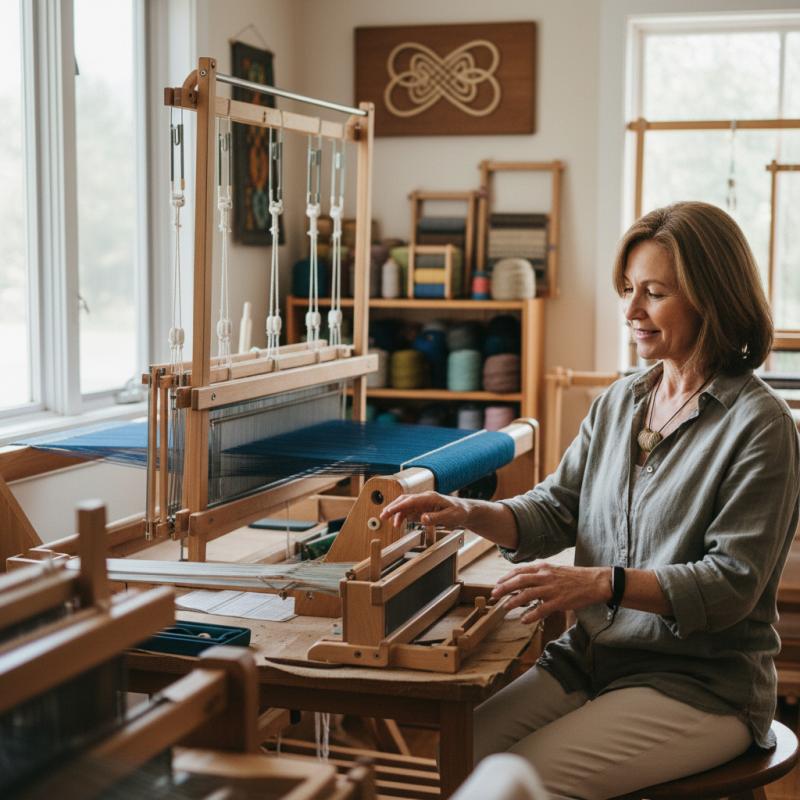
When starting your weaving journey, understanding the different types of looms is crucial. There are several options, each suited for various techniques. The simplest type is the frame loom, easy for beginners. It's often lightweight and portable. You can carry it anywhere, which is great for crafting on the go.
A floor loom offers a more comprehensive setup. It allows for complex patterns and larger projects. However, it might feel overwhelming at first. The mechanics of a floor loom can be intimidating. Consider if you want to invest time learning this equipment.
Rigid heddle looms bridge the gap. They are versatile and can handle many techniques. These looms can be a good middle ground for new weavers. Remember, it’s essential to choose a loom that resonates with your creative goals. Don't be afraid to experiment a bit before settling on your ideal loom. Finding the right fit could take some trial and error. Embrace the learning process; it's part of the art of weaving.
10 Essential Tips for Choosing the Best Weaving Looms for Beginners
| Tip |
Description |
Ideal For |
Loom Type |
| 1. Determine Your Needs |
Consider the types of projects you want to create. |
Beginners exploring different weaving styles |
All types |
| 2. Research Loom Types |
Understand rigid heddle, floor, and frame looms. |
Curious learners |
Rigid Heddle, Floor |
| 3. Size Matters |
Choose a loom size that fits your workspace. |
Limited space beginners |
Small Frame Looms |
| 4. Consider Portability |
Select a loom that you can easily move if needed. |
On-the-go crafters |
Portable Frame Looms |
| 5. Check for User-Friendliness |
Look for looms designed with beginners in mind. |
First-time weavers |
All types |
| 6. Evaluate Cost |
Set a budget that suits your financial situation. |
Budget-conscious beginners |
Cheap to Mid-range |
| 7. Read Reviews |
Get insights from other users about specific models. |
Informed decision-makers |
Various types |
| 8. Try Before You Buy |
If possible, test out several looms. |
Experience-seeking beginners |
All types |
| 9. Look for Support Resources |
Choose looms with ample tutorials and community support. |
New learners seeking guidance |
Modern Loams |
| 10. Embrace Experimentation |
Don’t be afraid to try different techniques and materials. |
Innovative weavers |
All types |
Key Features to Consider When Selecting a Loom
When choosing a weaving loom, several key features stand out. First, consider the size. A loom that's too large can be daunting for beginners. A compact model allows easier handling and manipulation. According to a recent survey, 73% of new weavers prefer smaller looms for their first projects. This preference helps them build confidence and skills gradually.
Next, look for versatility. A loom that offers multiple functionalities can be beneficial. Some looms can create various patterns, which adds value to your learning process. Reports indicate that approximately 60% of beginner weavers find that looms with more features keep them engaged longer. However, having too many options may sometimes overwhelm. Balancing simplicity with functionality is crucial.
Ease of assembly is another essential feature. Many beginners struggle with complicated setups. A loom that can be quickly assembled encourages experimentation. Approximately 45% of users appreciated straightforward instructions in a recent study. Threads may tangle at times, causing frustration. Finding a loom that minimizes these issues can significantly enhance the weaving experience.
Assessing Your Budget for Weaving Looms
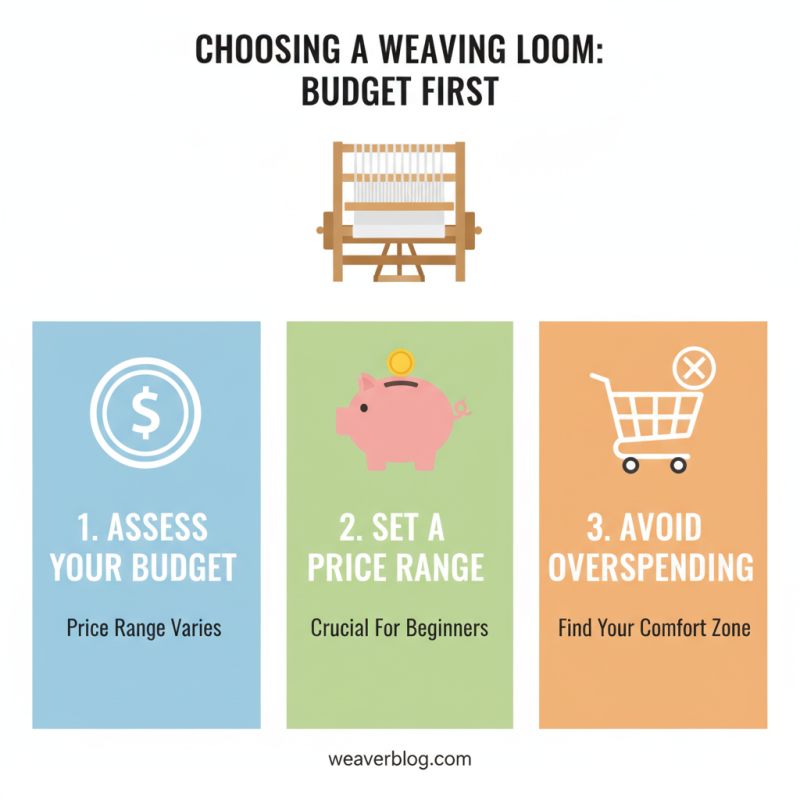
When selecting a weaving loom, start by assessing your budget. Weaving looms come at various price points. Knowing how much you can spend is crucial. You don’t want to overspend, especially as a beginner. Set a range that feels comfortable for you.
Consider what features you need. Some looms are basic, while others include advanced options. If you are just starting, a simpler loom can be sufficient. Remember, you might not use all the bells and whistles right away. Invest in a loom that meets your current needs but allows for future growth.
Tip: Always search for second-hand options. Many experienced weavers sell their old looms. You could find quality looms for less money. Another tip is to join local weaving groups. Members can share advice on budget-friendly options. Learning from others can save you money and enhance your skills. Such connections are invaluable, especially for novices.
Finding the Right Size Loom for Your Space and Project
When choosing a weaving loom, size is a crucial factor. A large loom might seem appealing, but it requires ample space. Consider your workspace carefully. If your room is small, a compact loom could be a better fit. It allows for easier movement and setup. Also, think about the type of projects you want to create. A smaller loom is perfect for simple patterns or scarves. On the other hand, larger projects require more surface area.
It’s also important to assess your storage options. Will you have a dedicated space for your loom? If not, a foldable or sectional loom might be beneficial. You want to avoid clutter and frustration. Check your project materials too. Some looms are best suited for thicker yarns, while others work better with fine threads. Take a moment to visualize your creations. Imagining the final product can help guide your size choice.
Remember, every loom has its pros and cons. There may be times when you regret not choosing differently. Your preferences can evolve as you gain experience. Reflecting on your initial choices can lead to valuable insights. Don’t rush the decision. Take your time finding the loom that feels right for both your space and your creative vision.
Essential Accessories and Tools for New Loom Users
Choosing the right accessories is crucial for new loom users. Essential tools can enhance your weaving experience. A reliable set of weaving needles is a must-have. They allow for easier manipulation of threads and reduce frustration. Additionally, invest in a good pair of scissors. Sharp scissors can make precise cuts, which is vital for clean finishing.
Another key accessory is a measuring tape. Accurate measurements are important for ensuring your projects stay true to size. According to industry reports, beginners benefit from having a dedicated space for weaving. It helps improve focus and productivity.
Tip: Keep a weaving journal. Documenting your projects and struggles can lead to valuable insights over time. It’s a reflective practice that promotes growth. You might feel overwhelmed with your first project, but that’s part of the journey. Learning curves are normal. Embrace imperfections; they offer lessons that refine your skills.