Top 10 Textile Weaving Manufacturers for Global Buyers
Choosing a textile weaving manufacturer can shape fabric quality, delivery stability, and long-term sourcing costs. Global buyers need more than attractive product photos or broad claims about production capacity. They need evidence.
This guide presents ten textile weaving manufacturers serving international markets. Each company is considered through practical buyer concerns, including loom capability, fabric construction, minimum order quantities, sampling speed, quality control, and export experience. Attention also goes to certifications, traceability, workplace standards, and environmental practices. A supplier may offer hundreds of fabric designs, yet still struggle with shade consistency between batches. That detail matters.
The evaluation reflects information available from company materials, industry records, and buyer-facing evidence. Where possible, it considers test reports, factory audits, technical specifications, and documented customer support. A polished website proves little. Direct questions remain essential. Buyers should request swatches, production samples, inspection procedures, and clear lead-time commitments before placing larger orders.
The ranking is useful, but not absolute. Different projects require different strengths. A fashion brand may value flexible sampling, while a uniform supplier may prioritize repeatable color matching and dependable volume. Price alone can hide costs linked to defects, delays, or weak communication. Some information may change over time, and public sources cannot reveal every factory condition. That limitation deserves attention. Careful verification still belongs with the buyer.
With these considerations in mind, the following manufacturers offer a practical starting point for sourcing woven fabrics across global markets.
Textile Weaving Manufacturing: Scope, Processes, and Market Role
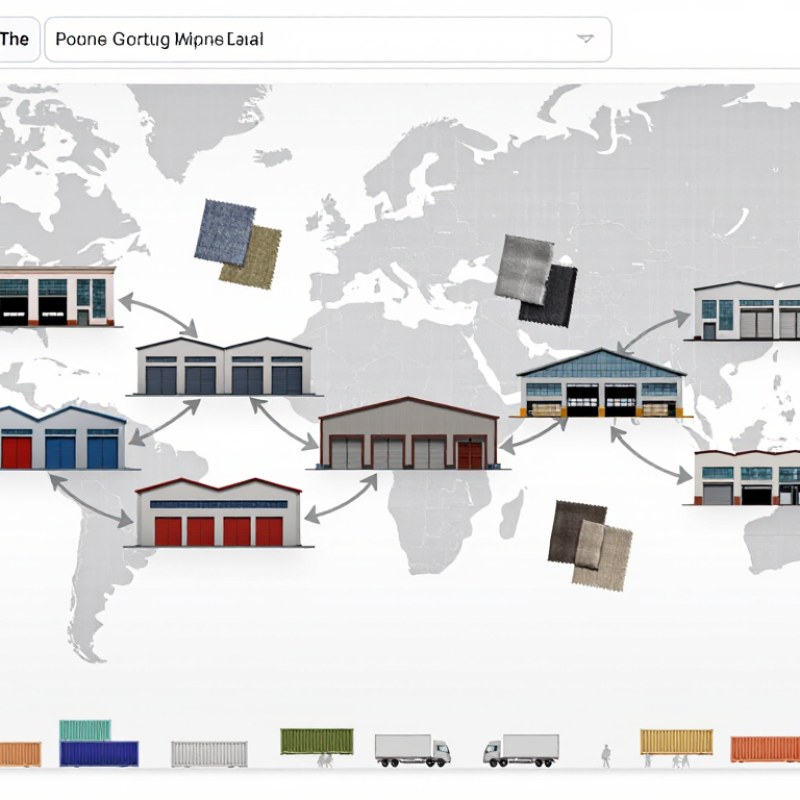
Textile weaving manufacturing converts yarn into stable fabric through controlled interlacing. Its scope covers fiber preparation, warping, sizing, weaving, inspection, and finishing. Mills produce apparel cloth, upholstery, technical fabrics, and household textiles. Fiber choice changes every stage. Cotton may need moisture control, while polyester demands careful heat management. In a working mill, beams carry hundreds of warp ends into a loom. Weft insertion then forms the planned construction. Small tension errors can create stripes, holes, or uneven width. These details matter to global buyers.
Modern production may use air-jet, rapier, projectile, or narrow-width looms. Each system balances speed, fabric weight, noise, maintenance, and order flexibility. Process control begins with yarn testing and continues through loom sensors and laboratory checks. Inspectors commonly review width, mass, color consistency, shrinkage, tear strength, and seam performance. Reliable manufacturers document batch numbers and retain samples. That evidence supports traceability, repeat orders, and corrective action. Yet laboratory results never tell the whole story. A fabric can pass testing and still feel wrong in a garment.
The market role extends beyond production. Weaving capacity supports regional employment, export supply, product development, and resilient sourcing. Buyers should compare lead times, minimum quantities, energy practices, wastewater controls, and worker safety records. Factory visits can reveal practical weaknesses, such as dusty storage or rushed inspections. Those observations deserve honest attention. No manufacturer is perfect, and production plans can fail during peak seasons. Clear specifications, approved samples, and regular communication reduce avoidable disputes. The strongest supplier relationship grows from measurable performance, not attractive claims.
Criteria for Selecting the Top Ten Global Weaving Manufacturers
Selecting the top ten global weaving manufacturers requires more than comparing catalogues. A reliable review should score fabric quality, delivery consistency, traceability, compliance, and technical support. I would give each category a clear weight, then verify claims through factory audits, laboratory reports, production samples, and buyer references. Machine age matters, but operator skill matters more. Small details matter.
Textile Exchange’s Materials Market Report 2024 recorded global fibre production at 124 million tonnes in 2023. It projects production could reach 160 million tonnes by 2030. This growth increases pressure on manufacturers to prove material origin and resource efficiency.
UNEP reports that textiles may create 2–8% of global greenhouse gas emissions. Therefore, the strongest candidates should disclose energy use, wastewater controls, recycled content, and corrective actions. Certifications help, but certificates alone are not enough. Buyers should request scope details and renewal dates.
A clean showroom proves little. Lead times should be tested with a small order before annual contracts begin. I would also examine defect rates, shade consistency, minimum order quantities, and response times during a production problem. No ranking is perfect. Regional logistics, currency changes, and seasonal capacity can distort results. Still, evidence-based scoring offers global buyers a more dependable path than attractive promises.
Profiles of Ten Leading Textile Weaving Manufacturers
Top 10 Textile Weaving Manufacturers for Global Buyers
Profiles of Ten Leading Textile Weaving Manufacturers
The ten profiled manufacturers represent different strengths, not identical business models. Several operate integrated mills, controlling yarn preparation, weaving, dyeing, and inspection under one roof. Others specialize in air-jet, rapier, or technical-fabric production. Their looms commonly support cotton, polyester, recycled fibers, and blended constructions. Production flexibility matters because buyers increasingly request smaller batches and faster sampling.
Textile Exchange’s Materials Market Report 2024 estimated global fiber production at about 124 million tonnes in 2023. It also projects continued growth toward 2030. That pressure affects every weaving floor. Leading suppliers now document recycled content, energy use, wastewater controls, and batch traceability. Some facilities use automated warp monitoring and digital inspection cameras. These tools can reduce defects, but they do not replace skilled operators. Human judgment still catches subtle shade changes and edge damage.
The strongest manufacturers usually show stable delivery records, laboratory testing, and clear quality agreements. Many publish certifications for recycled inputs, chemical management, or social compliance. Buyers should verify certificate scope and expiration dates. A logo alone proves little. ITMF industry surveys have repeatedly highlighted weak demand, cost pressure, and uncertain investment conditions. That context makes capacity claims harder to compare. A ranking is never perfect. One supplier may excel at high-volume basics, while another handles difficult jacquards or flame-resistant fabrics better. Sample approval, shrinkage results, and shipment consistency remain more useful than polished presentations.
Top 10 Textile Weaving Manufacturers for Global Buyers
An anonymized comparison of ten leading textile weaving manufacturer profiles based on publicly reported production scope, international market reach, product diversity, and sustainability certification coverage. The composite score is an index rather than a revenue or production-volume figure.
Higher scores indicate broader capabilities for global buyers, including fabric variety, export coverage, manufacturing scale, and documented compliance practices. Manufacturer identities are intentionally omitted.
Products, Technologies, and Regional Strengths of Each Manufacturer
Global buyers should compare ten manufacturer profiles by product depth, machine intelligence, and regional service. A Japanese loom specialist focuses on air-jet and rapier systems for high-speed apparel fabrics. A German engineering house supplies narrow fabric looms and precision controls for technical textiles. An Italian producer combines weaving preparation, coating, and finishing equipment for premium interiors. A Belgian specialist develops carpet and floor-covering looms with dense pile control.
An Indian manufacturer offers cost-efficient shuttleless looms for cotton, denim, and home textiles. A Chinese supplier provides broad machinery portfolios, including weaving, inspection, and digital monitoring. A Turkish producer serves nearby apparel clusters with flexible rapier machines and fast spare-part access. A Taiwanese manufacturer emphasizes electronic jacquard systems and synthetic-fiber applications. A Korean supplier targets automotive fabrics through high-tension weaving platforms. A Spanish producer concentrates on specialty fabrics, including filtration and industrial reinforcement materials.
Regional strength matters. Asia provides scale, component networks, and competitive installation costs. Europe often leads in engineering precision, automation, and process integration. The Textile Exchange Materials Market Report 2024 recorded 124 million tonnes of global fiber production in 2023, increasing pressure for efficient production and traceable materials. ITMF machinery statistics also show continued investment in advanced looms, despite uneven regional demand. Numbers can mislead. A cheaper machine may consume more energy or require longer maintenance delays. Buyers should request verified output trials, energy data, operator training records, and local service references before contracting. Reliability is tested on the factory floor.
Top 10 Textile Weaving Manufacturers for Global Buyers - Products, Technologies, and Regional Strengths of Each Manufacturer
| Rank | Manufacturer Profile | Primary Manufacturing Region | Main Woven Products | Key Weaving Technologies | Regional and Market Strengths | Common Compliance and Sustainability Capabilities | Best Fit for Global Buyers | Typical Production Focus |
|---|---|---|---|---|---|---|---|---|
| 1 | Integrated European Technical Textile Manufacturer | Western Europe | Automotive fabrics, industrial mesh, coated fabrics, protective textiles, filtration fabrics | High-speed rapier and air-jet weaving, multi-layer construction, precision coating, heat-setting, and automated inspection | Strong engineering support, short European supply chains, strict process control, and access to automotive and industrial markets | ISO 9001 quality systems, ISO 14001 environmental management, recycled-polymer options, and traceability programs are commonly available | Industrial buyers requiring technical specifications, repeatability, testing documentation, and long-term supply programs | Medium to large technical production runs |
| 2 | Large East Asian Apparel and Home Textile Mill | East Asia | Cotton shirting, denim, twill, poplin, uniforms, bedding, and decorative home fabrics | Air-jet and rapier looms, computerized dobby systems, digital sampling, mercerization, calendaring, and garment-washing integration | High export capacity, broad fiber sourcing, strong apparel supply chains, and efficient production of standardized fabrics | OEKO-TEX-type chemical controls, wastewater treatment, recycled-fiber programs, and social-audit support may be offered by qualified facilities | Fashion, uniform, hospitality, and home-textile buyers needing volume, color consistency, and broad construction choices | Large-volume commercial production |
| 3 | South Asian Cotton and Blended Fabric Producer | South Asia | Cotton sheeting, canvas, drill, workwear fabric, voile, viscose blends, and printed woven fabrics | Shuttleless rapier weaving, compact spinning integration, rotary and digital printing, sanforizing, and softening finishes | Competitive cotton sourcing, flexible minimum order quantities, strong product-development support, and established export experience | Organic or recycled fiber sourcing, wastewater treatment, factory social compliance audits, and restricted-substance testing are widely available depending on the mill | Private-label apparel, workwear, bedding, and lifestyle brands balancing cost, customization, and moderate order volumes | Small to large commercial orders |
| 4 | Japanese Precision and Specialty Weaving Mill | Japan | High-density fabrics, premium shirting, specialty synthetics, functional outerwear fabrics, and advanced lightweight textiles | Ultra-fine yarn weaving, high-density air-jet weaving, jacquard control, resin finishing, water-repellent treatment, and laboratory-based quality testing | Exceptional consistency, advanced material development, premium finishing, and strong performance in high-value niche applications | Detailed fiber traceability, chemical-management controls, energy-efficiency projects, and recycled synthetic options are common in export-oriented mills | Premium fashion, outdoor, uniform, and performance-product buyers prioritizing quality over lowest unit cost | Specialty and premium production runs |
| 5 | Turkish European-Market Fabric Manufacturer | Türkiye | Denim, cotton twill, shirting, towels, upholstery fabrics, workwear materials, and blended fabrics | Rapier weaving, denim finishing, garment-wash development, digital printing, laser-compatible finishing, and rapid sample production | Fast delivery to Europe, integrated spinning and finishing options, strong fashion development, and efficient smaller-batch replenishment | Recycled cotton and polyester programs, water-saving dyeing, wastewater treatment, organic-fiber sourcing, and common European compliance documentation | European apparel, retail, hospitality, and workwear buyers needing speed, design flexibility, and regional logistics | Flexible medium to large orders |
| 6 | Taiwanese Functional and Synthetic Textile Producer | Taiwan | Polyester performance fabrics, nylon fabrics, stretch woven fabrics, outdoor textiles, and industrial fabrics | Air-jet weaving, microfilament processing, stretch-yarn insertion, moisture-management finishing, lamination, and durable water-repellent treatment | Strong synthetic-fiber research, high-performance finishing, electronics and outdoor supply-chain links, and reliable export quality | Solution-dyed fibers, recycled polyester, bluesign-type chemical management, energy monitoring, and water-reduction processes may be available | Outdoor, sportswear, luggage, footwear, and technical-product buyers seeking performance specifications and material innovation | Medium to large performance-fabric programs |
| 7 | Italian Luxury and Interior Textile Mill | Italy | Luxury jacquards, upholstery fabrics, furnishing textiles, decorative fabrics, wool blends, and premium accessories | Electronic jacquard weaving, dobby weaving, multi-shuttle construction, yarn-dyed pattern development, flocking, embroidery, and specialty finishing | Design-led development, high-end finishing, heritage craftsmanship, and strong relationships with luxury interiors and fashion sectors | Natural-fiber sourcing, material traceability, low-impact finishing, product testing, and European chemical-compliance documentation are commonly supported | Luxury interiors, premium hospitality, designer furniture, fashion accessories, and high-value decorative applications | Low to medium premium production runs |
| 8 | Indian Home and Decorative Textile Exporter | India | Home furnishings, curtains, cushion fabrics, table linens, cotton canvas, jacquards, and handloom-inspired fabrics | Rapier and jacquard weaving, yarn dyeing, block and screen printing, digital printing, embroidery, washing, and garment-made-home-textile integration | Wide cotton and linen product range, strong design capability, flexible customization, and established home-textile export channels | Organic cotton, recycled fibers, fair-labor programs, wastewater treatment, and third-party social and product-safety testing may be provided by compliant facilities | Home décor, hospitality, retail, and lifestyle buyers seeking customized designs and mixed production techniques | Small to large customized orders |
| 9 | North American Industrial Fabric Manufacturer | North America | Belting fabrics, filtration media, geotextiles, protective fabrics, industrial webbings, and coated substrates | Heavy-duty rapier weaving, leno weaving, monofilament processing, coating and laminating, heat-setting, tensile testing, and automated defect detection | Close customer collaboration, strong engineering and testing infrastructure, domestic supply security, and specialized industrial know-how | ISO-based quality and environmental systems, recycled-content options, waste reduction, product safety testing, and documented material traceability are common | Construction, filtration, transportation, safety, agriculture, and industrial buyers requiring tested performance and dependable delivery | Contract and engineered production programs |
| 10 | Southeast Asian Integrated Textile Manufacturer | Southeast Asia | Polyester apparel fabrics, uniforms, workwear, home textiles, canvas, lining fabrics, and blended woven materials | High-speed rapier weaving, air-jet weaving, piece dyeing, digital printing, functional finishing, and integrated cut-and-sew services | Competitive labor and operating costs, expanding regional trade access, strong apparel manufacturing networks, and flexible export logistics | Recycled polyester, wastewater treatment, energy-efficiency initiatives, chemical testing, and buyer-specific social-compliance programs may be available | Global apparel, uniform, promotional-product, and home-textile buyers seeking competitive pricing and integrated manufacturing | Medium to large export orders |
Note: Capabilities, certifications, minimum order quantities, lead times, and material availability vary by facility and should be confirmed through current technical, compliance, and production documentation.
How Global Buyers Can Compare and Choose a Weaving Partner
Global buyers should compare ten weaving partners with a shared scorecard, not attractive samples alone.
Textile Exchange’s Materials Market Report 2024 estimates global fiber production reached
124 million tonnes in 2023 and may approach
160 million tonnes by 2030. That scale increases pressure on capacity, consistency, and material traceability.
Ask each manufacturer for loom type, usable width, fabric weight tolerance, warp and weft specifications, minimum order quantity, and monthly capacity. Request three recent production records, not only a showroom sample. Measure shrinkage, skew, color variation, and defects after washing.
Small differences become expensive at container scale.
Quality systems deserve evidence. The ISO Survey 2023 recorded over 1.26 million ISO 9001 certificates worldwide, yet certification alone cannot prove weaving performance. Review calibration logs, inspection plans, corrective-action reports, and independent laboratory results. Check whether recycled or certified fibers can be traced from incoming bales to finished rolls. Confirm realistic lead times, backup power, spare-parts access, and worker safety procedures through an onsite or qualified remote audit.
The percentages are only a starting point. They may fail for urgent programs or highly technical fabrics. Re-score after pilot orders, because one successful sample can hide weak process control. Keep written acceptance limits and escalation contacts before purchase orders are issued.
Related Posts
-
What Is the Best Textile Weaving Machine in China?
-
10 Tips for Buying the Right Fabric Machine
-
Top 10 Smit Weaving Machine Features You Need to Know
-

2026 Best Fabric Weaving Machine Options for Quality Production?
-
Top 10 Weaving Machines for Home Use to Enhance Your Crafting Experience?
-

Top 10 Weaving Machines for Home Use in China